
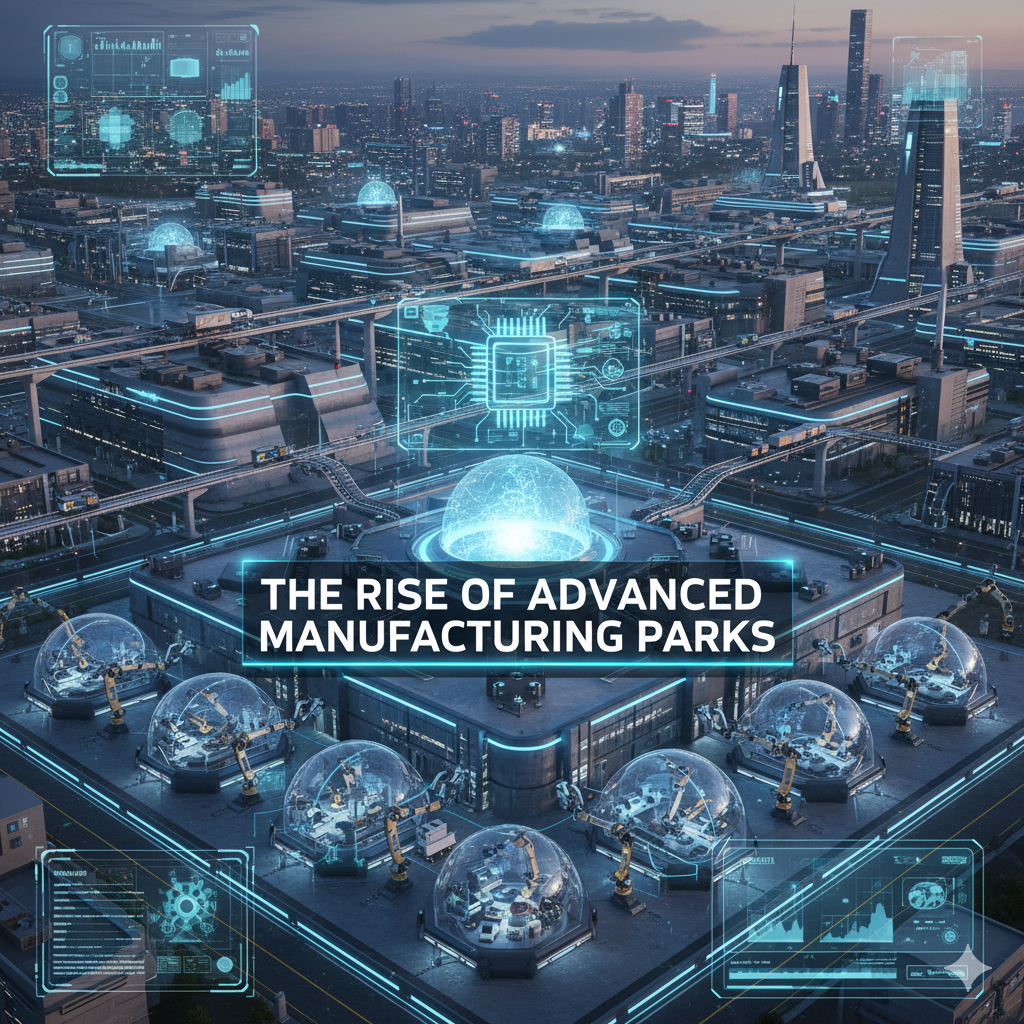
The industrial landscape is undergoing a transformation. Traditional factories are being replaced — or augmented — by advanced manufacturing parks: specialized, high-technology zones that combine infrastructure, innovation, and ecosystems to support next-gen production. These parks are quietly becoming the backbone of industrial modernization, enabling countries and companies to leapfrog into high-value manufacturing.
What is an Advanced Manufacturing Park?
An advanced manufacturing park is more than just an industrial zone or factory cluster. It is a purpose-built ecosystem designed to support industry 4.0 / smart manufacturing, R&D, supply chain integration, and often sustainability goals.
Characteristics often include:
-
Plug-and-play infrastructure (power, utilities, connectivity)
-
Shared common facilities (test labs, prototyping, clean rooms)
-
Data infrastructure: IoT, automation, high-speed networks
-
Proximity to research institutes, universities, and innovation hubs
-
Integrated logistics, supply chain nodes, warehousing
-
Sustainability features: green energy, water recycling, waste management
-
Policy incentives, regulatory ease, governance support
In essence, these parks aim to lower the barrier to entry and accelerate scaling for high-tech manufacturing.
One of the classic examples internationally is the Advanced Manufacturing Park (AMP) in Sheffield, UK, hosting a cluster of advanced firms, research centers, and collaborative infrastructure. Wikipedia+1
Why Are They Rising Now? Key Trends & Drivers
Several global and domestic forces are aligning to push the growth of advanced manufacturing parks:
1. Technology Convergence & Industry 4.0
Robotics, AI, additive manufacturing, digital twins, and sensor networks are becoming mainstream in manufacturing. This requires integrated infrastructure and ecosystems that only well-designed parks can provide. Brookings+2World Economic Forum+2
2. Supply Chain Resilience & Localization
Post-COVID, geopolitical disruptions, and rising trade tensions are pushing firms to regionalize supply chains. Advanced parks help localize critical manufacturing capabilities. World Economic Forum+1
3. Capital Intensity & Scale Economies
High-tech manufacturing requires large capital, specialized tools, and scale. Parks help aggregate demand, spread fixed cost, and share infrastructure.
4. Policy Push & Industrial Strategy
Governments globally are supporting specialized industrial corridors, tech parks, and “next-gen” industrial zones to capture high value chain roles. In India, new “new generation industrial parks” aim to integrate sustainability and smart design. ETManufacturing.in
5. Sustainability & Resource Efficiency
As energy, water, and environmental constraints tighten, parks enable centralized resource management — e.g. shared renewable power, waste recycling, efficient utilities — making high-tech manufacturing viable and responsible.
Conclusion
Advanced manufacturing parks are not just the next rung in industrial evolution — they are transformational platforms that can accelerate a region’s leap into high-value, future-ready production. For countries aiming to capture more share in global supply chains, investing in and executing these parks well can become a competitive differentiator.